
Part I: Main Street Does Not Need More Software. It Needs More Time.
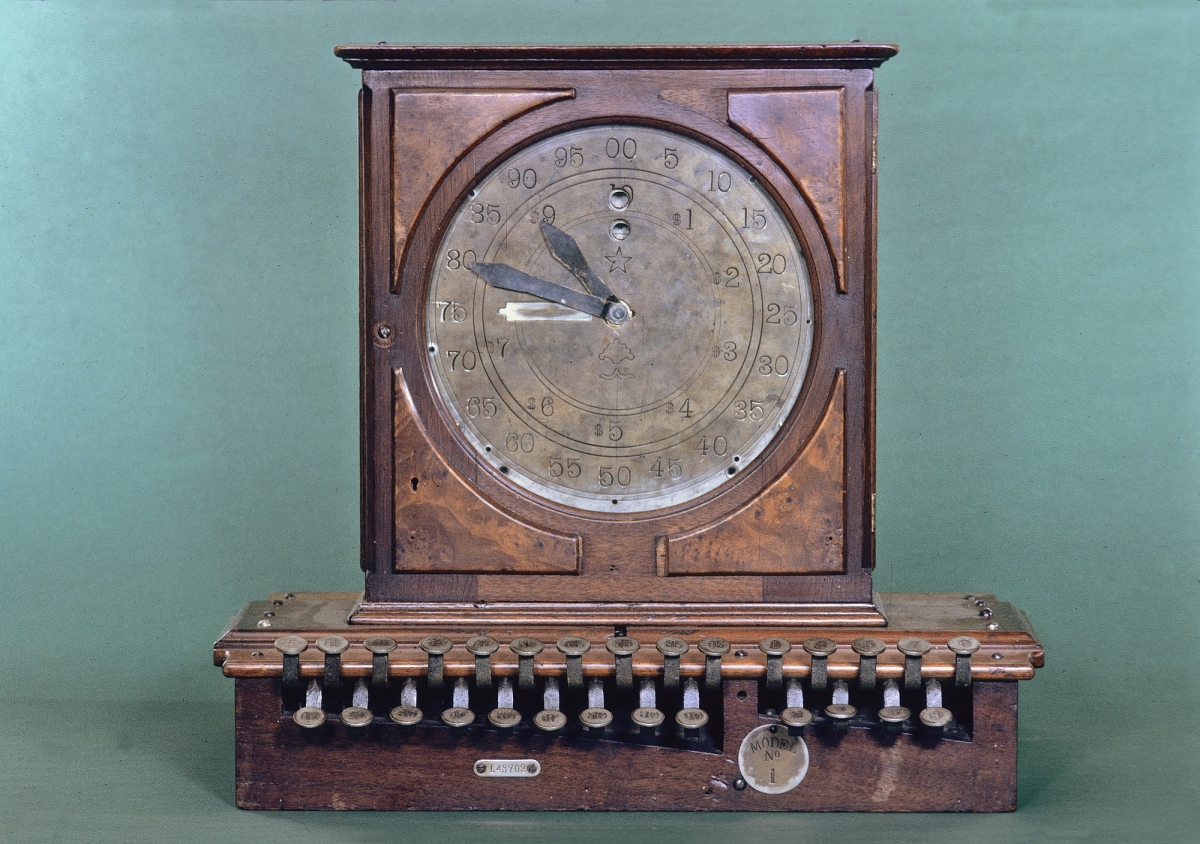
A saloonkeeper built the cash register to recover missing money. AI can give small-business owners digital workers that recover missing time.
Table of Contents
- James Ritty invented the cash register because his saloon could not tell him the truth
- Main Street looks small one customer at a time, but it powers 43.5% of U.S. GDP
- Small-business owners run out of time before they run out of software
- Kevin O’Leary is right about AI implementation, but the market needs distribution
- The best SMB channels meet owners at the moment their business becomes real
- The cash register became the POS because owners needed the business to tell the truth
- AI creates time when it coordinates the work humans were never built to carry
- Agents perform tasks, workers own outcomes, and a digital workforce carries the business
- The winning digital workforce platform must start from a truth the owner already trusts
- Clover becomes interesting because Fiserv connects operating truth to financial trust
- A digital workforce gives the owner Monday morning back
- Digital workers should be priced like labor and built like infrastructure
- Clover must build shared memory, merchant permissions, vertical workers, and a marketplace of capacity
- The next great small-business platform will help the business carry itself
James Ritty invented the cash register because his saloon could not tell him the truth
James Ritty had the kind of problem that makes a business owner stare at the till long after the room has emptied. It was the end of another busy night at his saloon in Dayton, Ohio. The bartenders had been pouring, customers had been sliding coins across the counter, and by every visible sign the evening should have been a good one. But when Ritty counted the cash, the drawer seemed light.
The maddening part was the imprecision of it. The money was not missing in some theatrical way, with a trapdoor, a villain, and a trail of coins leading to the guilty party. It was simply short, often enough to create suspicion, but not clean enough to prove. The room had been full, the orders had been moving, the business had been alive, and yet the money in the drawer did not quite match the owner’s sense of what had happened. Ritty’s instincts told him some of the coins were not making their way to the till, but instinct is not a ledger.
After the Civil War, as American cities and businesses grew, owners increasingly hired clerks and barkeepers to serve customers, and it became easy for employees to keep part of the money they received. Ritty and his brother John developed a machine with a large display showing what customers paid and a locked compartment that tallied receipts. It became the basis for a commercial product with one of the great names in business history: Ritty’s Incorruptible Cashier.
The cash register began as an answer to an owner’s oldest question: how do I know what happened when I cannot watch everything?
“Incorruptible Cashier” is a magnificent name. It sounds like a temperance lecture, a courtroom witness, and a product launch got into the same carriage. Victorian hardware did not waste a lot of energy on subtlety, but the name is useful because it says the quiet part out loud: Ritty needed the business to tell him the truth.
Before the cash register was a checkout device, it was an owner’s attempt to solve an owner’s problem. Ritty did not lack ambition, intelligence, or work ethic. He lacked a reliable way to see what happened in all the tiny moments when the business moved faster than one person’s attention. A customer ordered, a bartender poured, a coin changed hands, and the night kept going.
Over time, Ritty’s truth machine became the point of sale. The customer arrived, the employee acted, the product moved, the payment cleared, the inventory changed, and the operating day left a record of itself. For much of Main Street, the POS is still the first place the business becomes visible.
The first cash register helped owners recover missing money. The next great small-business platform will help owners recover missing time.
Main Street looks small one customer at a time, but it powers 43.5% of U.S. GDP
The SMB market is one of the most important and underappreciated markets in America because the individual customer can look small from an enterprise-sales point of view. A coffee shop. A florist. A neighborhood restaurant. A contractor. A dog groomer. A dental office. A salon. A gym. A local franchisee. A person with a domain name, an LLC, a payment terminal, and a terrifying amount of personal courage.
Enterprise software teaches people to look for whales. SMB requires a different eye. The individual account may be small, but the market is enormous, dense, renewable, and resilient. The U.S. Small Business Administration’s Office of Advocacy says there are 36,207,130 small businesses in the United States. They represent 99.9% of firms, employ 62.3 million people, account for 45.9% of private-sector employment, and produce 43.5% of GDP. The same SBA FAQ notes that more than 80% of the paperwork burden for small businesses comes from the IRS alone, which is a useful reminder that small businesses do not merely lack intelligence or ambition. They lack slack.
Small businesses are the engine of the American economy — creating jobs, driving innovation, and strengthening communities.
The sector mix is broader than the usual Main Street shorthand. Restaurants and retailers matter, but they are only part of the story. The national small-business profile spans professional services, transportation, other services, construction, real estate, healthcare, administrative services, retail, food and accommodation, finance, education, manufacturing, wholesale, and many other categories. Main Street is not a quaint little slice of the economy. It is the distributed operating layer of the country.
That distribution changes the business model. Enterprise revenue is concentrated, which means a single customer can make the year and a single lost renewal can damage one. SMB revenue is distributed across thousands, tens of thousands, or hundreds of thousands of customers. The work is harder in other ways because the product has to be loved, the channel has to be efficient, and the experience has to survive the reality of a very busy owner.
The best SMB companies are built on many small decisions by customers who keep choosing the product because it makes the business easier to run. There is no grand enterprise mandate forcing adoption. There is the owner, the team, the day, and a simple question: did this help?
Small-business owners run out of time before they run out of software
The owner experiences all of this as Tuesday. The dishwasher called out, the new employee still has not finished the paperwork, the supplier substituted the wrong product again, and payroll is coming. A regular who usually comes in on Friday has not been back in six weeks. The negative review from last night is still unanswered, the weekend schedule is thin, and a high-margin item is selling faster than expected, but nobody has checked whether there is enough inventory to get through Saturday.
Somewhere in the dashboard there is probably a useful signal, but the dashboard is waiting inside yet another login, and the day has already started. A small-business owner may be curious about AI. She may have tried ChatGPT to write a job description, summarize a review, draft a customer email, or create a social post. That is useful, and it is often where experimentation begins, but curiosity does not create capacity.
The best way to understand AI in SMB is to ask what the owner no longer has time to notice. What follow-up did not happen? What customer quietly disappeared? What invoice aged past the point where it should have been chased? What inventory pattern only became obvious after the stockout? What cash-flow problem could have been seen earlier if someone had been watching?
Time is the working capital of the owner.
Every small-business owner manages two forms of working capital. One is cash. The other is time. Cash runs out visibly. Time disappears more quietly into scheduling, reorders, reviews, approvals, reconciliations, customer follow-ups, and the thousand little decisions that do not look expensive until the owner realizes the whole day has been spent keeping the business from forgetting itself.
That is the emotional truth underneath the AI conversation. Small businesses want the advantage AI promises, but the demand is for work to be handled. The follow-up should happen, the exception should get caught, the report should become action, and the owner should stop being the only thing preventing the business from dropping balls.
Kevin O’Leary is right about AI implementation, but the market needs distribution
This brings us, eventually, to Kevin O’Leary. Kevin has been showing up in my feed lately with a very Kevin O’Leary idea, which means it is direct, commercial, and just polished enough to fit inside a television segment. There is a Canadian directness to it too, which gives me a little extra permission to pay attention. The nickname “Mr. Wonderful” alone is a kind of brand architecture. It says: I may be difficult, but at least I brought the capital.
 O’Leary has said that, if he were 25 today, he would focus on AI implementation and data center development. His point is that small businesses are eager to adopt AI but need help executing it. In the version reported by The Times of India, he wrote that small businesses are “desperate to adopt AI” but need help with execution, creating an opportunity to solve a large pain point.
Small businesses are desperate to adopt AI but need help executing it.
He is pointing at the right market. Small businesses have heard the AI story. They know something important is happening. What they lack is a path from possibility to operating reality.
Reimagine Main Street and PayPal found that more than 75% of small businesses are either actively using or exploring AI implementation, signaling a shift from whether AI will be adopted to when and how. PayPal’s release also says 82% of surveyed small businesses believe adopting AI is essential to staying competitive.
Salesforce’s SMB research points in the same direction. Its data shows that 75% of SMB leaders feel they are falling behind competitors on technology, 88% feel overwhelmed by too many business tools, and 81% say they would spend more on technology from trusted vendors.
SMB AI will scale through trust, not novelty.
A wave of local AI implementers will emerge, and many will do useful work. The broader market, however, needs AI embedded in the platforms where small businesses already run. Kevin O’Leary’s phrase is “AI implementation.” The customer’s language is much simpler: help me get the work done.
The best SMB channels meet owners at the moment their business becomes real
One of the gifts of the SMB market is that business creation has visible behavior exhaust. People take steps as they become business owners. They choose a name, register the business, apply for tax IDs, open a bank account, get licenses, buy a domain, set up payments, find insurance, create a website, choose accounting software, seek credibility signals, and join local networks.
The SBA’s startup guide reads like a map of these moments. It tells founders to conduct market research, write a business plan, fund the business, pick a location, choose a structure, choose a name, register the business, get federal and state tax IDs, apply for licenses and permits, and open a business bank account. These are practical steps, but they are also identity moments. They are the places where an idea starts turning into a business.
This is why companies like LegalZoom, GoDaddy, and the Better Business Bureau matter in SMB. LegalZoom sits close to formation, with LLCs, corporations, DBAs, nonprofits, EINs, registered agents, annual reports, business licenses, and business credit clustered around the moment someone makes a company real. GoDaddy’s Small Business Research Lab says its Microbusiness Data Hub covers more than 20 million microbusinesses and their owners, which shows how domains and websites can become early signals of business intent.
I saw the power of this at Microsoft. One of the best SMB programs we ever ran was the GoDaddy partnership for Office 365. The logic was wonderfully simple. When someone bought a domain, they were crossing a psychological threshold. The idea was becoming a business, and that business now needed professional email, identity, collaboration, and the basic tools of work.
So Office 365 appeared inside the GoDaddy flow, at the moment the customer was already moving. Rebecca Anthony ran that program beautifully because it respected the SMB buyer. It met the customer at the moment of formation with something that made the next step easier.
That is excellent SMB marketing: timing, trust, and distribution wrapped around a real customer moment. AI will need the same kind of path.

The cash register became the POS because owners needed the business to tell the truth
The cash register story gives us a better way to understand the AI opportunity. Ritty was solving for control. The POS solved for record. AI can solve for time.
The point of sale has always been more important than the name suggests. It is where the business becomes visible to itself. The sale appears there first, the payment clears there, the customer is recognized there, the product moves there, and the employee touches the transaction there. The operating day begins to produce truth there.
Digital employees need that truth. They need to know what sold, who bought it, who served them, what inventory moved, what cash came in, what cash is coming due, what customers have gone quiet, what reviews need attention, what employees are stretched, what rules apply, and which actions require approval. The next step in the evolution of the POS is a workforce that uses the truth of the business to give the owner time back.
The cash register knew what happened. The digital workforce knows what needs to happen next.
This is the Clover equivalent of the barcode moment. A barcode could be treated as a faster way to check out, or it could become the information architecture of modern retail. A POS can be treated as a better way to accept payment, or it can become the operating surface where digital employees begin to work.
The early cash register companies sold certainty. Every old ad has the same charmingly anxious subtext: your employees may be lovely people, but let’s not build an accounting system entirely on vibes. The next generation of SMB systems will sell a different kind of certainty. They will tell the owner what happened, what is happening, and what needs to happen next.
AI creates time when it coordinates the work humans were never built to carry
Every business runs on two kinds of work. There is work that requires a person: judgment, creativity, taste, relationships, discretion, care, and the ability to read a situation and know what matters. Humans are extraordinary at this work. It is the work customers remember and the work that makes a business feel alive.
There is also work that requires the collective: shared numbers, shared context, shared memory, clean handoffs, consistent follow-up, exception routing, reporting, reconciliation, reference-data pulls, and the thousand small acts of coordination that keep a business from dropping balls. This work fills the operating day. It is also work humans have never been especially well designed to carry alone.
For forty years, business software has tried to make individual people behave like one coordinated system. ERP tried to create shared numbers. CRM tried to create shared customer truth. Data lakes tried to create shared facts. Collaboration tools tried to create shared context. Dashboards tried to create shared awareness. Every “One Company” initiative was, in some form, an attempt to ask a room full of individuals to operate like a single organism.
The problem is not that people are broken. Individuality is the reason you hired them. You hired them for judgment, care, personality, creativity, relationships, and perspective. Asking those same people to become the coordination substrate of the business has always been the hidden tax of work.
Sangeet Paul Choudary’s Reshuffle thesis helps clarify why AI matters here. In Harvard Business Review, Choudary argues that AI’s economic impact is usually explained through falling costs of prediction or creation, while a more significant shift may come from falling costs of translation — the work of making teams, tools, and data understand one another. The title of his piece says it cleanly: AI’s big payoff is coordination, not automation.
AI’s big payoff is coordination, not automation.
The distinction is simple: humans are brilliant at work that requires judgment, creativity, relationships, perspective, discretion, and care; they were never built for the collective work of shared context, shared truth, handoffs, routing, reporting, and coordinated action. A digital workforce is valuable because it is collective by architecture: shared memory, shared context, shared trust, by design. It operates as a system, and that is the work it does.
AI’s biggest SMB opportunity is coordination.
The owner needs the business to remember, route, reconcile, follow up, escalate, and act without requiring one human being to carry the whole operating day in her head. That is why the digital workforce idea matters. It moves AI from occasional assistance into accountable capacity.
Agents perform tasks, workers own outcomes, and a digital workforce carries the business
An AI agent is a capability primitive. It is a function you invoke to draft the email, extract the field, summarize the meeting, classify the message, generate the response, or call the tool. Agents are useful ingredients.
An AI worker is an accountable role. It has a job, memory, permissions, tools, handoffs, and responsibility for an outcome. A Review Worker owns the work of making sure reviews are handled appropriately. A Cash Flow Worker watches deposits, payables, payroll, working-capital pressure, and timing. A Campaign Worker identifies the customer, checks the context, prepares the offer, and understands the constraints.
A digital workforce is the system. It is a structurally unified set of workers operating from shared memory, shared context, and a shared trust model by design. It is the unit of sale and the locus of differentiation.
Agents are what is inside. Workers are what get hired. The workforce is what the business buys.
The phrase digital employee is powerful because a small-business owner understands employees. She understands roles, shifts, responsibilities, training, trust, mistakes, accountability, and the relief of someone else owning the thing that otherwise sits on her plate. AI becomes useful when it feels less like software to operate and more like capacity to depend on.
The most valuable thing AI can give Main Street is time. The way it gives time back is by giving the business more workers.
The winning digital workforce platform must start from a truth the owner already trusts
Once the opportunity becomes a workforce opportunity, the next question is practical. Where would this workforce live? Each contender starts from a different truth.
Formation platforms like LegalZoom and GoDaddy start from identity. They meet the business early, at the moment when the founder is giving the idea a name, a legal structure, a domain, and a public face. Those moments matter enormously because they create powerful channels and early relationships. The limitation is that formation is not the same as daily operation. A platform that helps someone become a business is not necessarily the place where employees are scheduled, inventory moves, customers return, payments clear, and cash gets tight.
Intuit starts from financial truth. QuickBooks is already the financial back office for millions of businesses, and Intuit is moving explicitly in this direction. In July 2025, Intuit introduced a “virtual team” of AI agents inside QuickBooks, describing AI agents and AI-enabled human experts that help businesses save time, make smarter decisions, and improve money outcomes. Intuit says these agents complete workflows across customer relationship management, financial analysis, payments, accounting, and more, saving businesses up to 12 hours a month.
The Intuit starting point is the books, and the books are powerful because the financial record is trusted. For many Main Street merchants, though, the operating truth appears before it becomes accounting truth. The customer arrives, the product moves, the employee acts, the payment clears, and the inventory changes. Only later does the back office reconcile the world.
Shopify starts from commerce truth. Shopify POS captures order and customer data, updates inventory levels, and is especially valuable for retailers that sell both in person and online because it keeps inventory, payments, and customers in sync. That is a strong position for merchants whose identity is fundamentally commerce. Main Street also includes businesses whose daily reality is shaped by local service, labor, appointments, cash flow, repeat customers, and trust at the moment of delivery.
Toast starts from restaurant truth. Its platform includes point of sale, payment processing, online ordering, delivery, marketing, loyalty, scheduling, tips management, and restaurant-specific service models from quick service to fine dining. Toast could build a remarkable digital workforce for restaurants. Its depth is real, and so is its constraint: the same vertical focus that makes it strong in hospitality narrows its path to becoming the broad digital workforce platform for Main Street overall.
Square starts from seller truth. It has payments, POS, payroll, scheduling, marketing, loyalty, banking products, loans, app connections, and a strong SMB brand. Square should be taken seriously because it has breadth, simplicity, and seller trust. Its natural path is broad and credible, which makes it one of the most important competitors in this thesis.
Banks start from capital trust. They are part of the formation path, the lending path, the deposit path, and the survival path. They know the money, which matters. Most banks, however, are farther from the operating moment. They can see deposits and loans; they usually cannot see the review that went unanswered, the shift that is understaffed, the item that is about to stock out, or the customer who has not returned.
Each contender has part of the answer. Formation platforms have the beginning. Intuit has the books. Shopify has commerce. Toast has restaurants. Square has breadth. Banks have trust and capital. The company that wins the broader SMB workforce opportunity will need an unusual combination of operating truth, payment truth, financial trust, daily workflow, distribution, and a product experience that makes AI feel like help rather than homework.
Clover becomes interesting because Fiserv connects operating truth to financial trust
Clover becomes interesting because the visible Clover story and the more strategic Clover story are not the same. The visible story is the point-of-sale story. Clover sells systems for restaurants, services, retail, and healthcare, with tools for taking payments, reporting, inventory, employee management, customer engagement, gift cards, apps, integrations, and capital. The more strategic story is Fiserv.
Fiserv describes Clover as part of a plan to build the “pre-eminent small business operating platform,” and the company’s 2025 annual report ties that ambition to expanded features, industries, partnerships, geographies, Commerce Hub, embedded finance, CashFlow Central for small businesses, and agentic commerce for merchant clients including Clover. The same report also describes Fiserv’s broader financial-institution and merchant relationships, which matter because the future digital workforce for SMBs will need operating context and financial trust in the same neighborhood.
The banking relationship is the strategic hinge, though it needs to be described precisely. Clover is not attached to a bank in the sense that it belongs to one retail bank. It is attached to the banking system through Fiserv’s financial-institution relationships, merchant acquiring, payment processing, embedded finance, SMB cash-flow capabilities, and distribution through financial institutions and strategic partners.
Clover’s advantage is not that it sees the sale. It is that, through Fiserv, it can connect the sale to the financial life of the business.
That is a different kind of advantage. Clover sits close to the operating life of the merchant. Through Fiserv, it also sits near the financial life of the merchant. A digital workforce needs both, because it needs the transaction, the customer, the cash, the schedule, the inventory, the employee, the exception, the permission, and the financial consequence.
A chatbot can answer a question with a slice of context. A digital workforce needs the business context to be whole. Clover has a credible path to bring those pieces together in a way many competitors cannot, especially if it can turn Fiserv’s infrastructure advantage into a merchant experience that feels simple, trusted, and useful at the speed of a small-business day.

A digital workforce gives the owner Monday morning back
Imagine a restaurant owner opening her system on Monday morning. The weekend is over, the dining room is quiet, and the owner has a few minutes before the day starts again. Restaurants have a particular silence when they are between storms. The chairs are up, the floor is clean, and the room is pretending it did not just spend 48 hours trying to destroy everyone’s lower back.
The weekend is over, but the weekend is still everywhere: in the receipts, in the low stock, in the reviews, in the schedule, in the cash account, in the regulars who came back and the regulars who did not. The system has not merely recorded what happened. It has been working.
The Review Worker handled ordinary positive reviews and flagged the angry one that needs the owner’s eye. The Inventory Worker noticed that a high-margin item moved faster than expected and prepared a reorder before the weekend rush becomes a stockout. The Campaign Worker found customers who have not returned in 45 days and drafted a win-back offer, while checking that the offer will not create an inventory problem. The Shift Worker saw overtime risk before the schedule became expensive. The Cash Flow Worker noticed that payroll, supplier payments, and seasonal inventory needs are beginning to crowd the same window. The Capital Worker understands when working capital could help and when it would simply add pressure.
The power comes from the workforce acting as a system. When one worker learns something, the rest of the workforce can use it. When one worker changes the context, the others catch up immediately. When the owner sets a rule, the workforce shares the same trust model. When the business changes direction, the workforce can be repointed as a unit.
A digital workforce works because the workers share memory, context, and trust.
A business does not need clever functions scattered across a dozen tools. It needs a coherent system of outcome-owning workers that share memory, context, and permission by design. The Campaign Worker should know what the Inventory Worker knows. The Cash Flow Worker should know what the Shift Worker is seeing. The Capital Worker should understand the same operating reality as the POS, the payments data, the sales trend, and the owner’s rules.
This is why the unit of sale should be the workforce rather than the feature. SMBs understand the idea of hiring help. Clover can make AI legible by turning it into named workers with clear roles, permissions, and outcomes.
Digital employees are not a metaphor for replacing people. They are a way to stop wasting people on the work they were never meant to carry.
Digital workers should be priced like labor and built like infrastructure
The business model should follow the metaphor. Software is usually licensed by seats, modules, usage, or tiers. Digital workers should be priced closer to labor because the customer is buying capacity.
A restaurant owner understands roles, wages, shifts, hours, and outcomes. A growing services firm understands blended labor cost. A franchise operator understands what it means to standardize work across locations. A CFO in a larger SMB understands the difference between headcount, outsourcing, and automation.
The worker becomes the atomic unit of outcome ownership. A Review Worker is measured on response time, escalation quality, sentiment recovery, and hours saved. A Campaign Worker is measured on repeat visits, recovered customers, and revenue lift. An Inventory Worker is measured on prevented stockouts, waste reduction, and reorder accuracy. A Cash Flow Worker is measured on visibility, timing, collections, and avoided surprises.
The workforce is the differentiated platform. Anyone can expose a model to a workflow. The opportunity is to make the workforce structurally unified: shared memory, shared context, shared trust, and a shared operating surface. That is what makes it more than a collection of apps. That is what makes it more than AI sprinkled into the dashboard.
Priced like labor. Built like infrastructure.
That is the commercial bridge from software budgets to workforce budgets. Small businesses already spend money on work. The argument should be that some of the work filling the operating day can now be handled by a workforce that is always on, always in context, and always operating within the rules of the business.
Clover must build shared memory, merchant permissions, vertical workers, and a marketplace of capacity
A strategic position is not a product. Clover has an unusual advantage, but the advantage will not realize itself. Fiserv itself acknowledges that implementing its One Fiserv action plan will take time because “far-reaching operational and cultural shifts” do not happen quickly or easily. That caveat matters because the opportunity is real, but Square is strong, Intuit is serious, Toast is deep, Shopify is powerful, banks are trusted, and vertical SaaS players will move quickly inside their categories.
The first requirement is a shared operating memory. The workforce cannot become disconnected automations wearing friendly names. The Review Worker, Campaign Worker, Inventory Worker, Cash Flow Worker, Shift Worker, and Capital Worker need to read from and write to the same context substrate. If the Campaign Worker is about to launch an offer that would create an inventory problem, the Inventory Worker should know. If the Cash Flow Worker sees pressure next week, the Capital Worker should understand whether working capital helps or hurts.
The second requirement is a merchant-friendly trust and permission model. Small businesses will not tolerate rogue automation, especially when payments, cash flow, customers, employees, and capital are involved. The owner should be able to say what a worker can do automatically, what it can draft, what it can recommend, and what it must escalate. A Review Worker can respond to five-star reviews automatically but route angry customers to the owner. An Inventory Worker can prepare a reorder but require approval above a dollar threshold. A Capital Worker can surface an option but cannot initiate anything without the owner’s decision.
The third requirement is vertical depth. Restaurants, salons, retailers, contractors, clinics, gyms, and professional-services firms have different operating rhythms. A restaurant Shift Worker should understand labor, tips, tables, prep, online orders, and weekend demand. A salon Follow-Up Worker should understand appointments, no-shows, stylist capacity, rebooking, and loyalty. A contractor Quote Worker should understand estimates, invoices, job stages, materials, and customer follow-up.
The fourth requirement is a worker marketplace. The app-market metaphor asks the merchant to browse tools. The worker-market metaphor lets the merchant add capacity. Add a Review Worker. Add an Inventory Worker. Add a Cash Flow Worker. Add a Booking Worker. Add a Campaign Worker. Add a Quote Worker. Each worker should have a role, permissions, onboarding path, reporting cadence, and outcome metrics.
The go-to-market should use the channels that already work in SMB: banks, acquiring relationships, ISVs, app partners, accountants, local business communities, franchise systems, domain and formation partners, and vertical associations. The GoDaddy and Office 365 lesson comes back here. Find the moment when the business is becoming real, growing, struggling, expanding, or seeking credibility, and meet it there with the next unit of capacity.
Clover should also build community around the workers. SMB adoption is emotional and social. Owners talk to other owners. They notice what is working. They want proof from people like them. The stories should be concrete: time saved, customers recovered, reviews handled, stockouts prevented, invoices accelerated, and Friday nights the owner got back.
The next great small-business platform will help the business carry itself
For more than a century, small-business technology has helped owners see pieces of the business more clearly. The cash register made the transaction visible. The POS made the operating day visible. Accounting software made the books visible. CRM made the customer visible. Scheduling software made labor visible. Dashboards made almost everything visible, usually in a place the owner did not have time to visit.
Visibility helped. It also left the hardest work untouched. The owner still had to connect the dots, remember what the tools forgot, notice the pattern, chase the follow-up, route the exception, answer the review, check the schedule, reconcile the cash, and turn information into action. In many small businesses, the owner has been the system.
AI changes that because a digital workforce can carry the collective work humans were never built to carry alone: the memory, routing, reconciliation, follow-up, escalation, and shared context that keep the business from dropping balls. The promise is that the business begins to carry more of itself, so the owner can spend more of her day on judgment, customers, employees, craft, and care.
James Ritty wanted the business to tell him where the money had gone. The modern small-business owner has a different version of the same problem. She can see the sale, the payment, the schedule, the review, the customer record, the inventory count, and the cash position, but the meaning of those signals still too often lives in her head. The work of connecting them, remembering them, and acting on them has become the unpaid coordination tax of Main Street.
The next great small-business platform will help the business carry itself. And when that happens, the most valuable thing AI gives Main Street will be the one thing every owner is always trying to buy back: time.